Rishu

Construction ERP Software

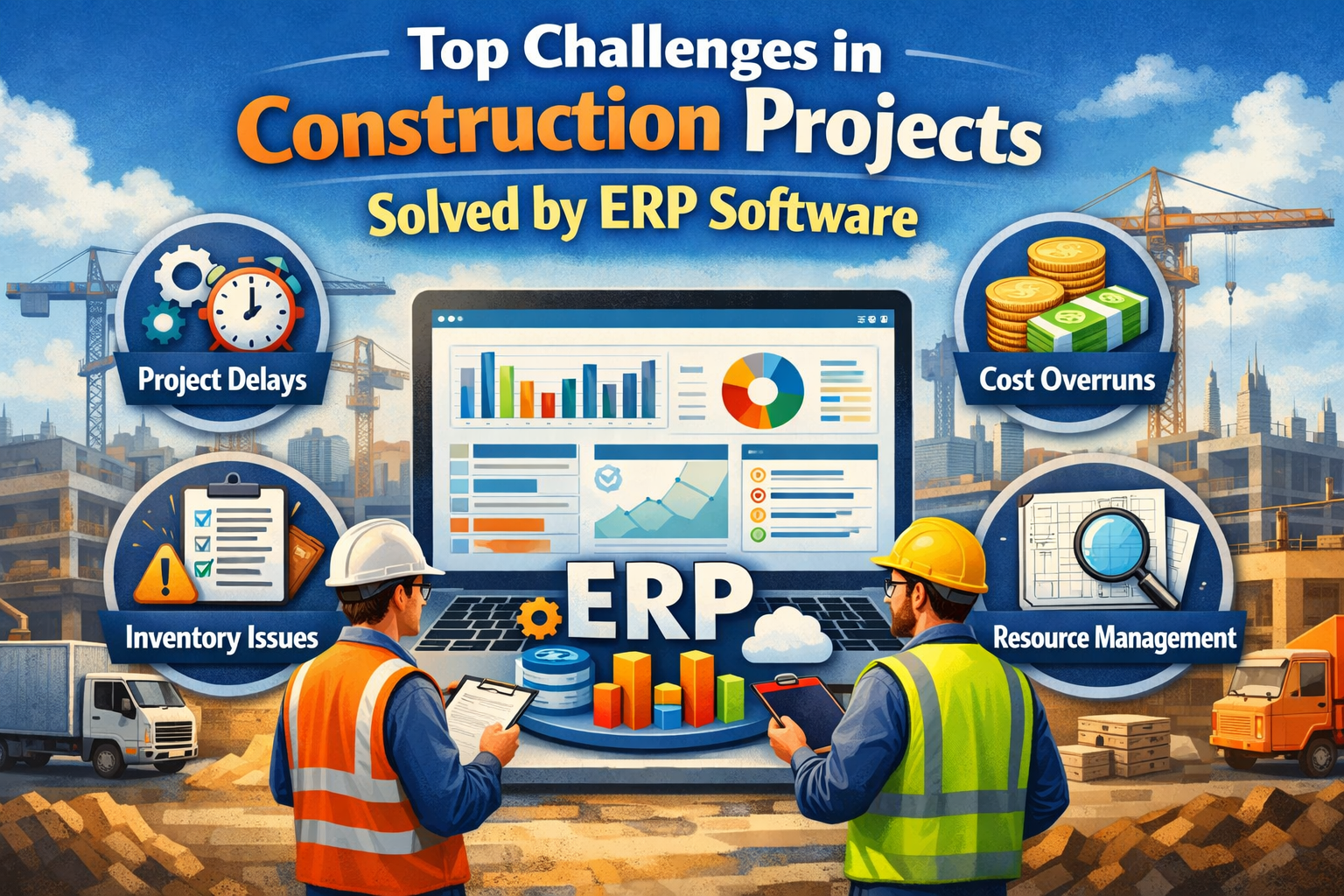
Top challenges in construction projects solved by ERP software

Information movement and project progress seldom walk hand in hand, especially in an industry like construction, where technology adoption is still considered an afterthought. A site manager will know when the concrete delivery gets delayed. But procurement teams won’t be aware of the same until they get a manual intimation. Finance may continue approving equipment rentals blindly without knowing that the project schedule has already shifted. This is why several companies are now gravitating towards the best construction ERP software. Unlike disconnected systems, it brings everything under one roof, from project scheduling and procurement to equipment usage and workforce management. The result? You gain end-to-end visibility and operational control like never before. Having said that, let’s unravel the benefits this ERP software will bring to the table for your construction business. Table of Contents  When project estimates look perfect— But reality speaks different Construction bids are recorded and locked months before the first equipment is delivered at the location. During this time gap, material prices fluctuate, labor availability changes, and contractor wages shift. The result? Project continuation with outdated cost assumptions, leading to profit margin shrinkage.  How ERP keeps project estimates and actual costs aligned? The three major verticals— estimation, procurement, and financial tracking— are intertwined deeply within the construction ERP software. Here’s how it will benefit you in the long run. Project forecasts once created during bidding can be effortlessly converted into budgets, with no financial presumption being lost during the handover phase. Once the purchase orders for cement, steel, or electrical components get approved, the software will automatically update project cost estimations with no manual intervention.  It will become easy for you to pinpoint which activities are likely to exceed planned budgets before time so that you can make necessary adjustments for the upcoming phases. Resource planning that falls apart once multiple projects start running Most construction companies have to work on multiple projects simultaneously. While this might seem to be an excellent opportunity to increase market outreach, the competition for the same labor crews, subcontractors, and equipment units introduces substantial hiccups. Without a centralized planning system in the picture, orchestration becomes guesswork. The result? You end up with operational challenges, like: Shifting of project timelines due to a sudden shortage of resources Equipment units are being moved at the last minute without prior intimation Skilled crews are being double-booked across multiple sites How ERP brings strategic resource planning to construction? With the software’s market share projected to shoot straight through the roof, touching a whopping value of $7.6 billion by 2034, your business cannot be left behind. Integrating the best ERP software for construction will help you: Track availability of labor teams, equipment units, and engineers through company-wide resource scheduling dashboards Know when and where the same crew is scheduled simultaneously so that you can prevent overburdening and streamline allocation strategies Assign workers based on certifications or trade expertise so that specialized work can be handled by the right personnel only Prepare for future equipment or labor requirements by thoroughly analyzing project timelines When change orders create financial and operational chaos Whether it’s design adjustments, unexpected site conditions, or client requests, change orders are inevitable and sudden across the entire construction industry. The result? Tracking how these modifications can impact budgets, timelines, and subcontractor responsibilities, and to what extent becomes truly challenging. With no proper foreseeability, you may end up being confused about the revised project scope. To top it off, preventing disputes over payment adjustments and delays in approvals will become excruciatingly difficult.  How ERP streamlines change order management? Now remind the concerned teams about license renewals, audit inspections, or regulatory submissions through the automated notification workflow. Your site supervisors can log safety inspections directly into the system to ensure permanency in compliance records.  Leverage the ERP software for construction industry to store building permits, environmental approvals, and inspection certificates in a unified, accessible location. Lack of executive visibility into what’s happening across projects Incomplete or delayed reporting poses a huge roadblock for leadership teams across construction projects. For instance, executives often receive performance updates during weekly meetings or after monthly reports are compiled. By the time issues surface, they transcend the stage of being fixable.  How ERP gives leadership a real-time view of project health? All the stakeholders will gain the power of remote monitoring of each project’s performance against planned timelines. Cost overruns, real-time profit margins, and expense trends surface without you having to wait for accounting reports. On top of everything, the best ERP software for construction industry will highlight the projects falling behind schedule or exceeding the pre-decided budget. Conclusion With construction projects becoming complex, managing day-to-day operations through mere spreadsheets or fragmented systems becomes way too risky. Thus, the construction ERP software ensures all the teams can access a centralized platform that connects forecasting, procurement, financial tracking, and workforce management in no time. Construct Xpert brings to you an industry-specific ERP tool, designed to help scale your operations while preserving your profit margins.

Top challenges in construction projects solved by ERP software Read Post »

construction management software

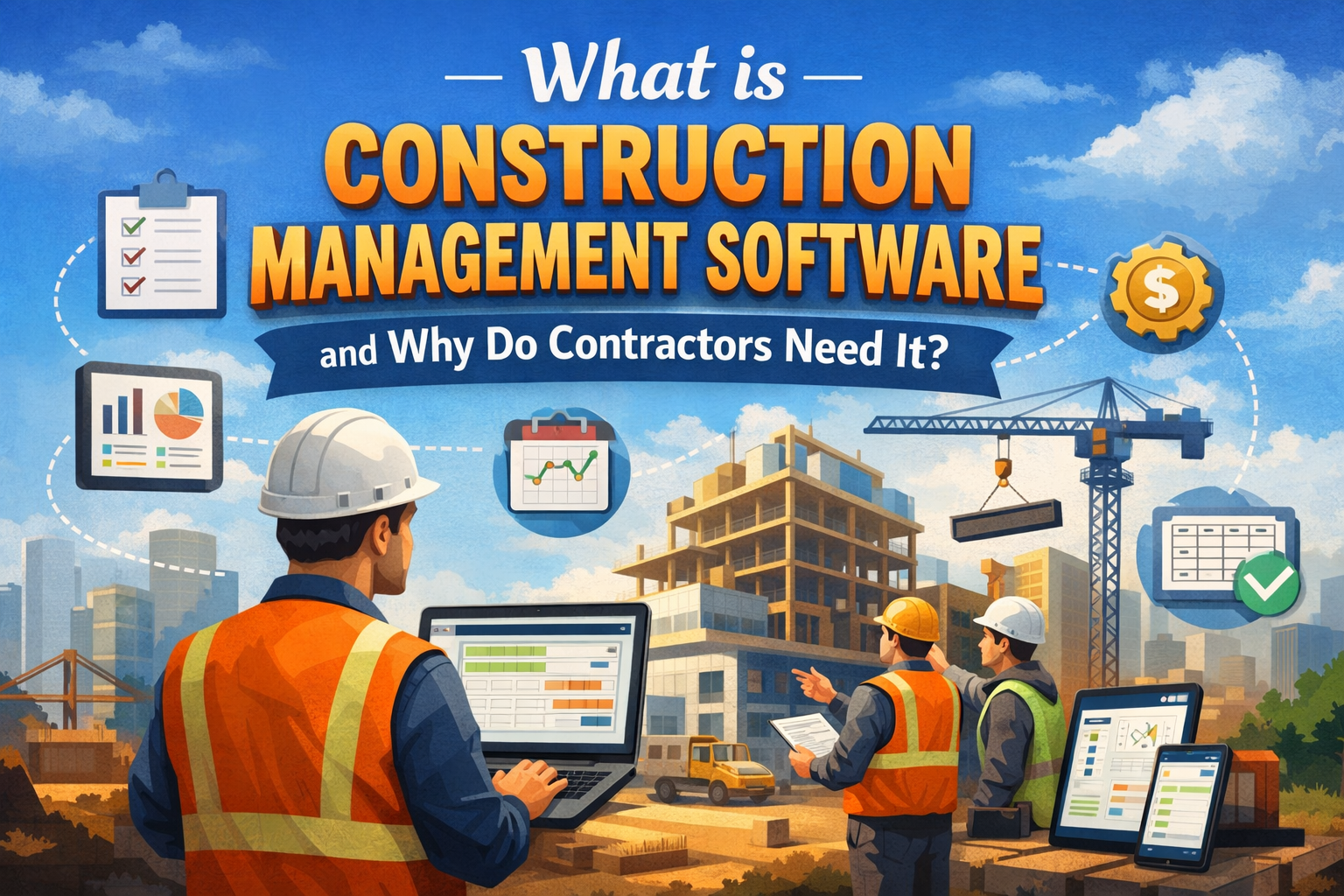
What is construction management software and why do contractors need it?

Calling multiple raw material vendors and dealing with heaps of compliance paperwork simultaneously is perhaps an everyday occurrence for you. Not only will the lack of data transparency introduce discrepancies, but also the fragmented communication will risk progress disruptions. The result? Delayed outcomes that are completely misaligned with the project’s initial scope. On top of this, the cracks introduced due to outdated methodologies often cause cost overruns and last-minute firefighting. This makes construction management software quintessential in today’s time. With the 2032-specific estimated value of $10 billion, you cannot leave the software’s integration in the backlog. Having said that, let’s uncover its true potential in streamlining construction projects and keeping margins floating. Table of Contents 

What is construction management software and why do contractors need it? Read Post »

Construction Management Software

How Construction Management Software Boosts Profitability in Construction Firms

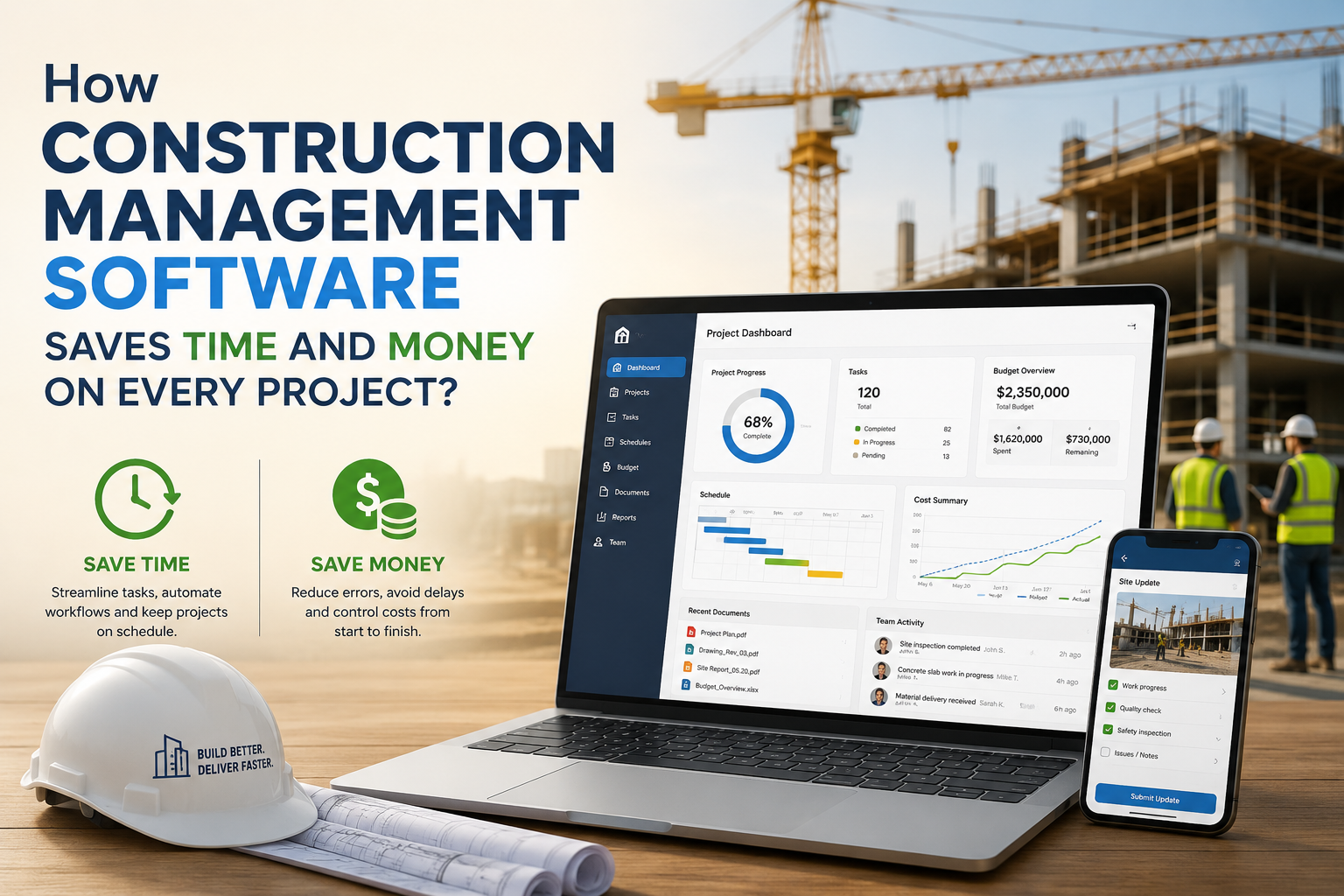
Control matters the most in the construction industry— a sector defined by tight margins and costly compensations. Whether it’s on the budget, inventory movement, timeline, or the customer expectation, appropriate management can boost profitability significantly. However, too heavy reliance on outdated methodologies, piles of paperwork, and paper-based workflows somehow push the achievable backwards. That’s where the construction management software shines brilliantly, helping businesses accelerate growth, amplify profits, and streamline operations. With its growing significance, we have articulated a detailed guide outlining the key ways the CMS can bring in more revenue. Table of Contents  Minimized Project Delays Behind every profit leakage, unaccounted delays have become the major contributor. Material shortages, labor downtime, design clarifications, and rework— all culminate in increased expense overruns and spilled-over schedules. A construction and project management software addresses this core issue by: Everyone, from engineers to supervisors, becomes opportune to work on the same live project timeline. In other words, every task commences and finishes right on schedule as per the projections. The result? No more standstill of the project, effortless avoidance of bottlenecks, and seamless resource utilization. Enhanced Cost Controls Profit loss isn’t just because of the notable absence of revenue potential in a project. Rather, most of the time, it’s because the budgets spiral out of control due to the lack of oversight. This is where a construction management system comes to the rescue, strengthening finances from the roots. Here’s how. Project managers thus get detailed insights into where exactly the money is flowing. It empowers them further to take accurate but corrective measures— renegotiating the supplier terms, adjusting schedules, and optimizing labor allocation. With the construction business management software integrated, a small drift won’t transform into a major budget blowout. Reduced Reworking and Revisions Whether it’s an outdated drawing or incomplete specifications, even the slightest discrepancy can lead to rework. It not only introduces unnecessary delays but also consumes about 40% of the allocated budget, approximately.  This is where construction management software will come in handy. Here’s how. Improved Workforce Productivity Both off-site and on-field teams are often overloaded with manual administrative tasks. These can be simple site inspections or complex data entry jobs. Either way, these consume too much of the valuable time, which otherwise could have been used for something more significant, contributing to the project’s real progress.  This is why investing in the best construction project management software has become a mandate in today’s time. It comes in-built with multifarious automated routines for workflows like: Per worker productivity shoots high, straight through the roof in no time. Hence, labor expenses can be reduced significantly. To top it off, project durations can be shortened, which will automatically translate into higher profit margins. Quite surprisingly, the market valuation of the construction management software market is forecasted to reach $16.62 billion by 2030, thereby setting the benchmarks high for all businesses across the global industry. Enhanced Risk Management Dangers of workplace injury and accidents aren’t the only things compliance violations bring along with them. Instead, it also leads to increased expenses, all thanks to unexpected downtime, litigation, compensations, and insurance claims. So, what businesses need to do is invest in construction and project management software. Only by doing so can they ensure optimal safety for all their workers and also the project’s progress wheels.  Here are the features that allow for mitigating and managing risks at construction sites. Once safety becomes an inevitable part of the digitized workflow, risk awareness starts deepening its roots. You Should Also Read These Blogs: Why smart contractors are switching to advanced construction management software? Stop Losing Materials: Use Construction Inventory Management Software Support for Scalability Informal processes and heaps of paperwork can never keep up with an expanding construction business. These will prove to be outdated in the long run, and if sustained prolonged, can even bring down the efficiency rate significantly. That’s why businesses need to invest in construction company management software to amplify their overall profitability.  CMS fosters scalability immensely through: Conclusion Integrating the construction business management software is no longer a digital luxury. Instead, it has transcended into a strategic necessity to drive higher profitability across all channels involved. CMS can help firms operate intelligently, faster, and compliantly through scheduling, minimizing rework, workflow automation, and real-time collaboration. Moreover, with skilled, reliable experts from Construct Xpert, you can rest assured that your business operations are in good, credible hands.

How Construction Management Software Boosts Profitability in Construction Firms Read Post »

ERP software for construction industry

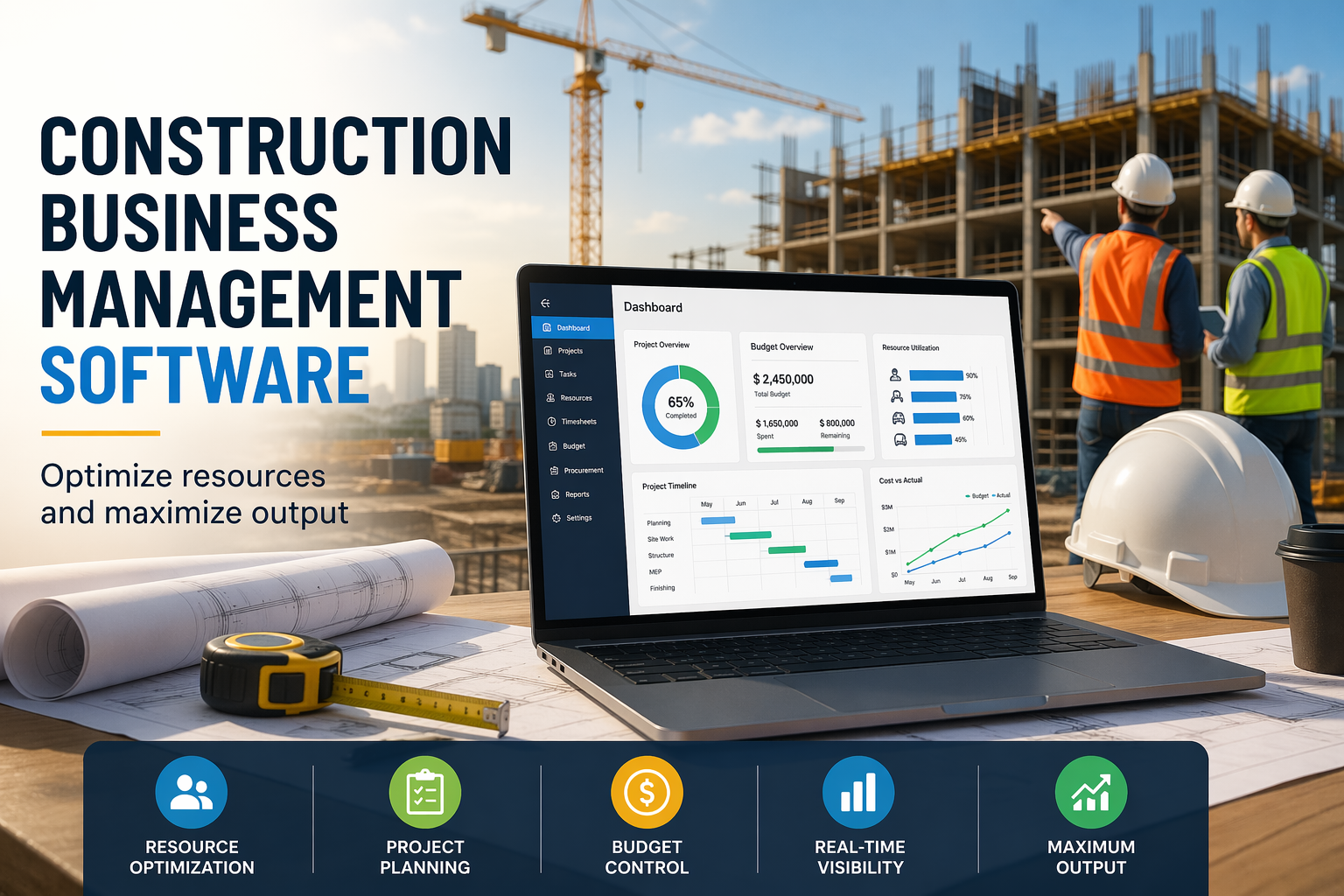
Maximizing profit margins with specialized ERP software for construction industry

Delays, overruns, rework, slow billing, and mispricing silently pull down the profit margin for most construction businesses. Such mishaps occur when you have almost no control over timelines, expenses, and decisions at moments when they truly matter. Quite shockingly, large-scale projects usually take 20% longer than the projected deadline, along with 80% of budget overrun. That’s why investing in a construction industry ERP software is the most pragmatic approach— not as a technological upgrade but as an ingenious financial instrument that safeguards your profit margins. What follows here is not just plain theory, but the precise ways ERP translates operational discipline into quantifiable financial gains. Table of Contents  Eliminating budget blind spots Realizing that costs have drifted beyond the pre-determined budget late causes profits to disappear in the blink of an eye. That’s why the construction industry ERP software connects every type of expense into a single cost control dashboard— project accounting, subcontracting, procurement, labor, and on-site. Below are the ways it pulls up the profit margins considerably. Reducing one of the biggest margin killers—Rework Redoing the same task all over again drains profits drastically as it causes wastage of valuable project assets— time, material, labor, and opportunity. So, if you want to establish a proper balance between your expenses and the initial budget, investing in the best ERP software for construction is a realistic, pragmatic approach. Here’s how it will help you counterbalance rework.  Improving labor productivity across the project Payroll is one of the major areas where a significant project budget needs to be allocated. Hence, workforce inefficiency will kill your profit margins silently, without letting you realize on time. The best ERP software for construction projects will help optimize labor utilization by: Tightening procurement and material cost control Material pricing volatility has emerged as one of the biggest threats to construction profitability. Uncontrolled purchases based on mere guesswork and instincts lead to unnecessary expense overhead. To top it off, delayed material procurement causes the project timeline to get extended further, thereby driving profit margins lower than the forecasts.  The best construction ERP software, however, flips the script by offering disciplined procurement methodologies. Here’s how.  Stopping cash flow leakage and speeding billing cycles Most construction businesses suffer from bottom-line profit margins, not because work fails to generate revenues. But rather it’s due to late cash realization, which often occurs when billing cycles are delayed, disputed, or incorrect. That’s why implementing the best construction ERP software is the go-to approach to strengthen financial stability and establish a disciplined billing cycle. Here’s how it can drive the profit margins high.  Optimizing resource and equipment utilization With construction ERP software, businesses can counterbalance underutilized equipment and poorly allocated crews across multifarious sites. Here’s how. Strengthening cost forecasting and risk planning Profit loss is often the result of accumulated risks seldom seen and mitigated from day one. This is where an ERP software for construction industry enters the picture, bringing financial predictability. Here’s how it guarantees a higher profit margin. You Should Also Read These Blogs: Stop Losing Materials: Use Construction Inventory Management Software How Construction Management Software Boosts Profitability in Construction Firms Conclusion Specialized ERP software for construction industry is no longer an optional technical upgrade— rather, it has become a crucial financial instrument to establish stability and drive profit margins high up. It brings the perfect blend of visibility, accountability, and control, allowing businesses to protect and expand the margins. To top it off, with ingenuous ERP like Construct Xpert, you can mitigate profit losses and bring in more revenues where it matters.

Maximizing profit margins with specialized ERP software for construction industry Read Post »

construction inventory management

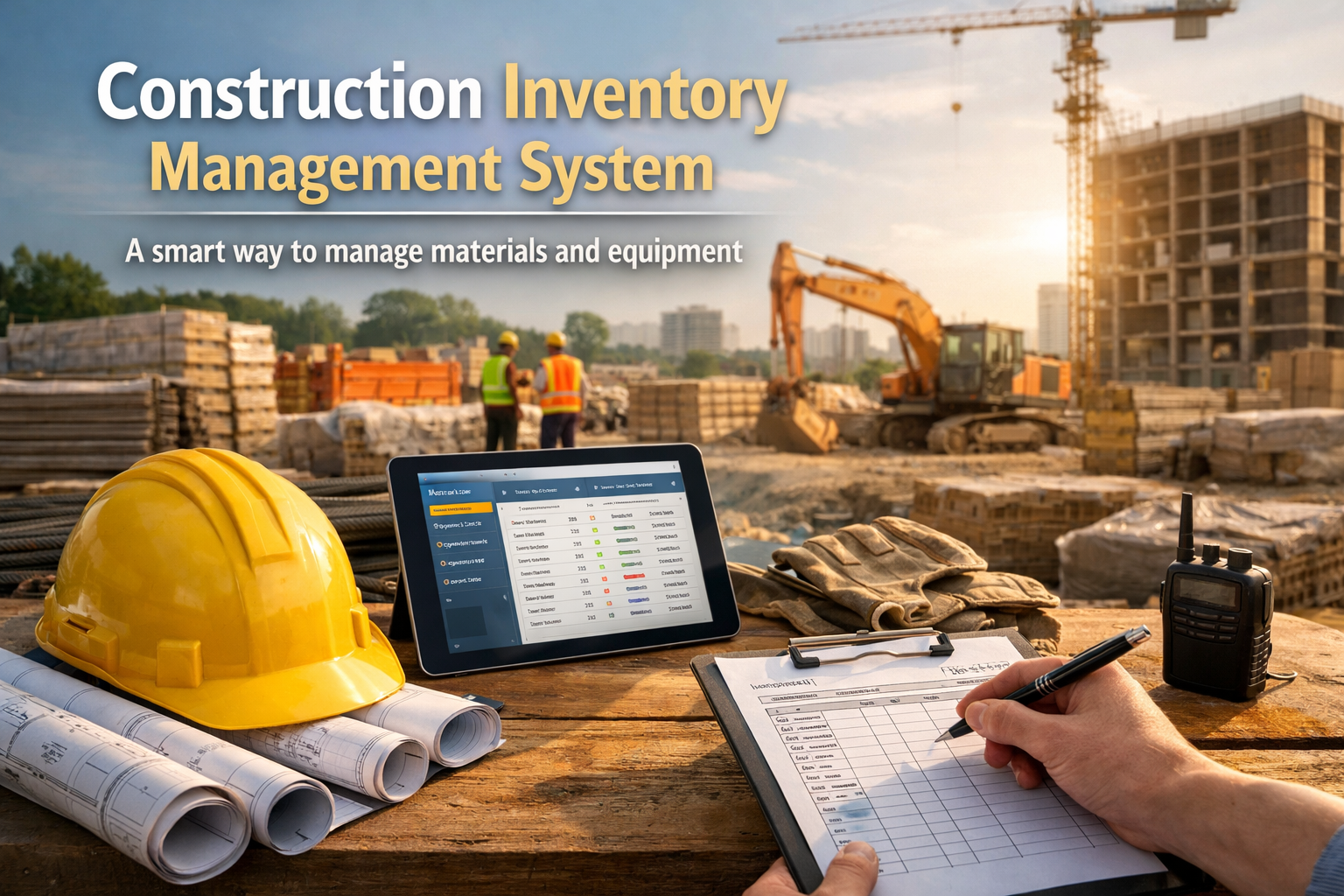
Stop Losing Materials: Use Construction Inventory Management Software

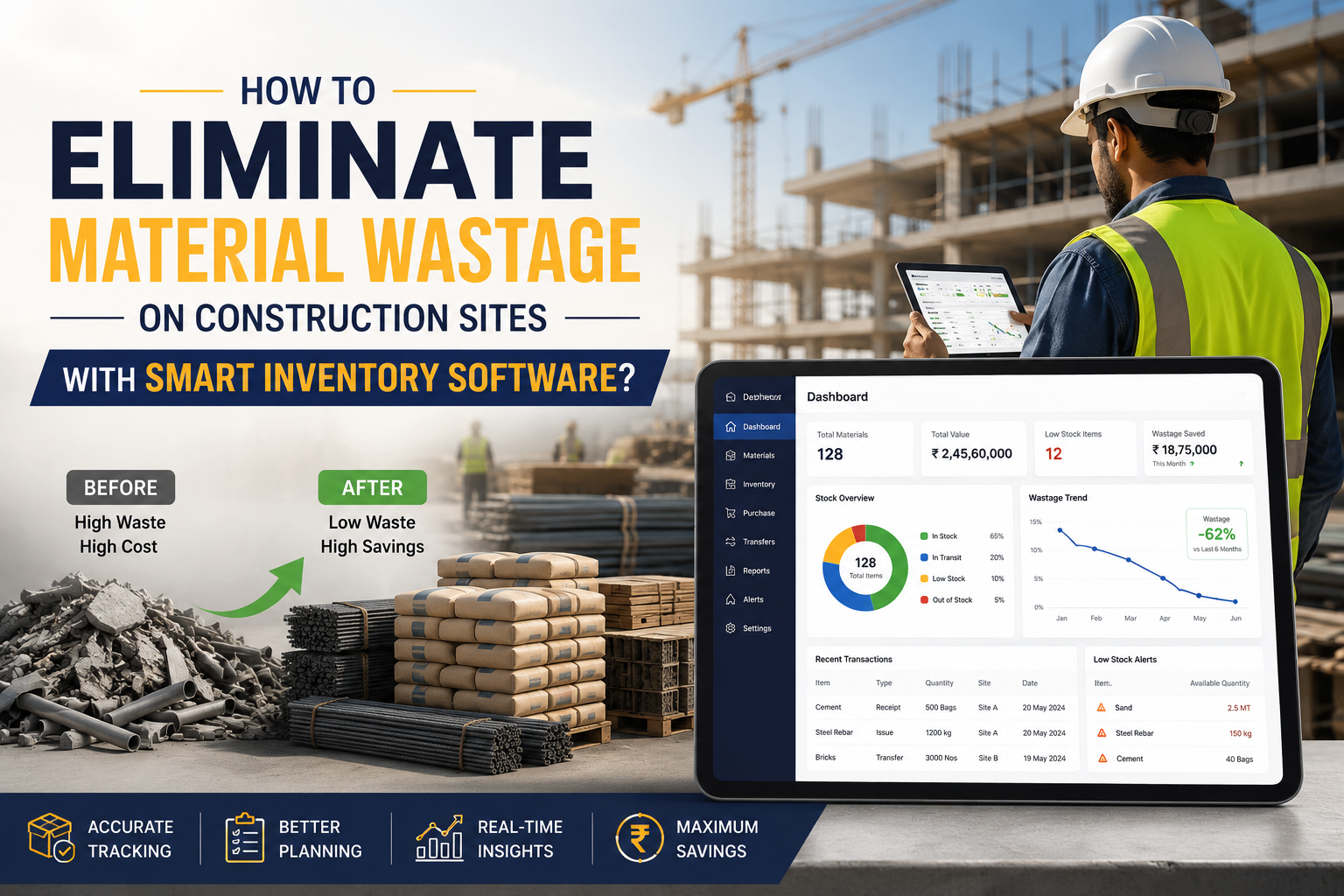
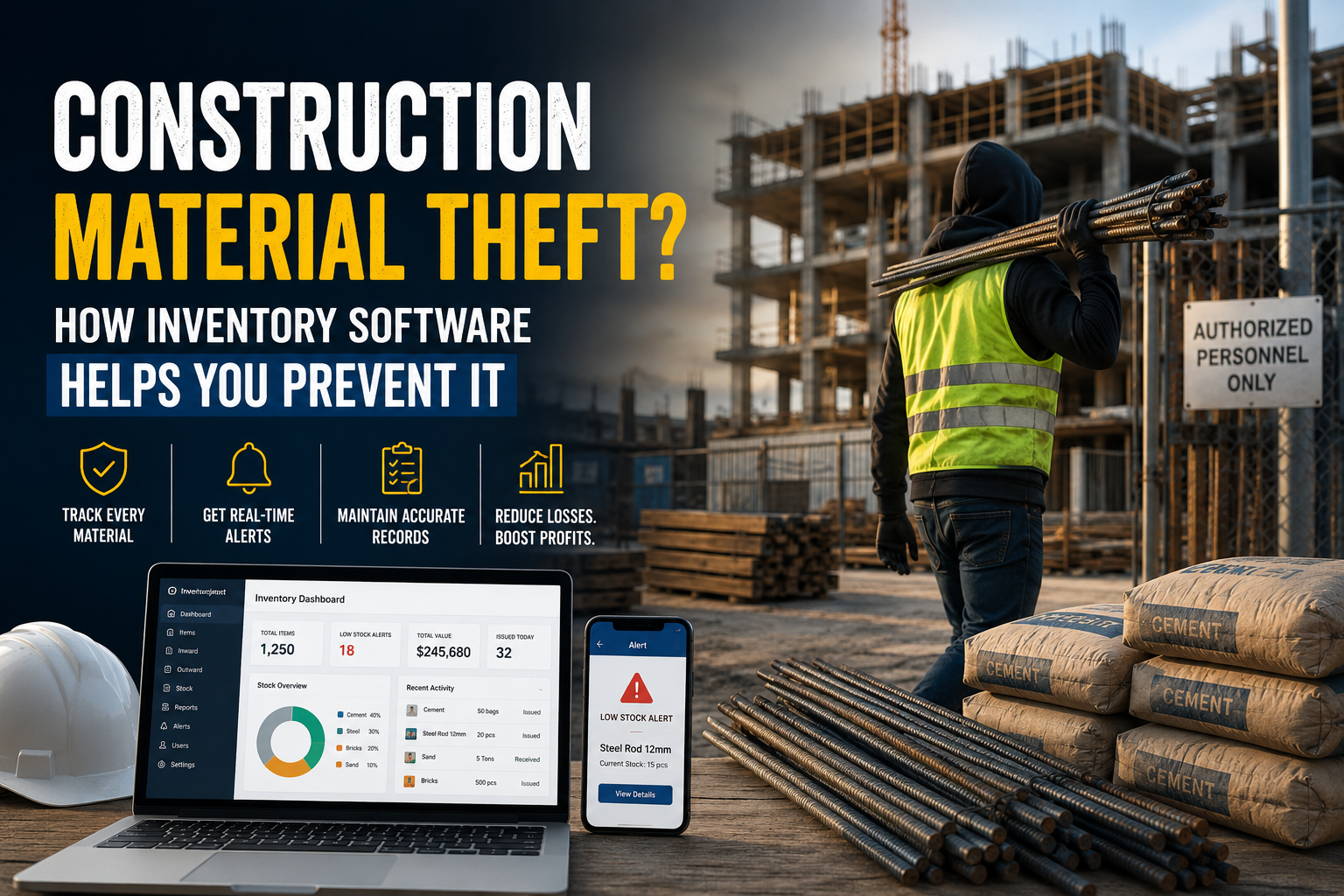
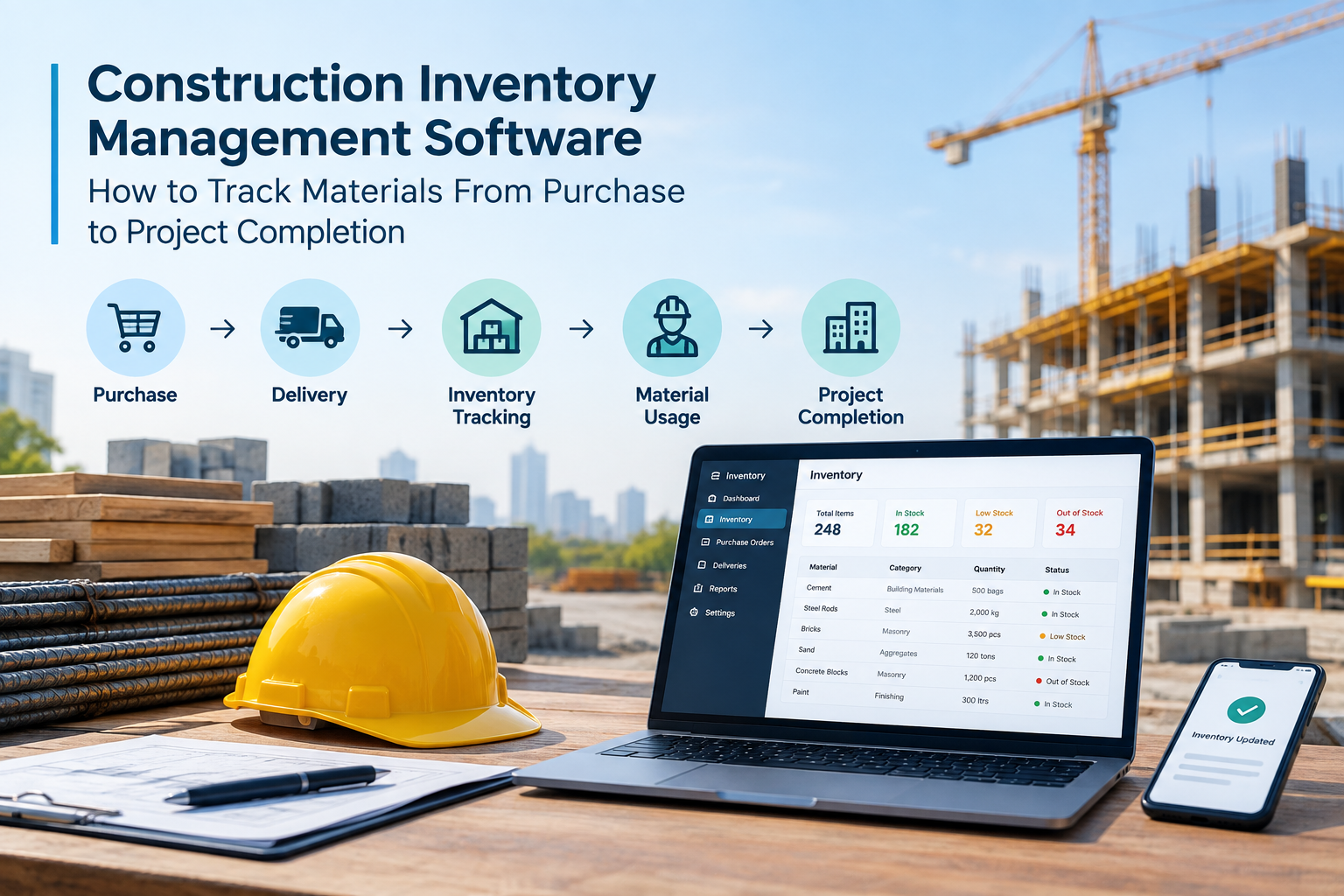
Losing raw materials in the construction industry doesn’t always involves a drama, seldom looking like a theft caught on camera. Most often, it’s subtle— materials getting misplaced, teams discovering the shortage only when work is stalled, or stock records and reality tell different numbers. The result? Money gets drained quietly, schedules are delayed, and reorders are placed forcibly that wouldn’t have been there in the first place. Industry research has highlighted that construction professionals spend approximately 35% of their valuable time on material tracking, inventory clarification, and error correction. This isn’t just inefficiency— rather, lost money that can’t be recovered. This is where construction inventory management software comes into the picture, digitizing records and building discipline at the business’s core. Having said that, let’s explore the ways CIMS can bring certainty, visibility, control, and accountability for construction materials. Table of Contents  Real-time visibility turns guesswork into control At the core of material loss, there is uncertainty. Once teams remain in the dark about what stock exists, what’s available, and its precise location, inventory can slip through the cracks. Traditional systems like paper registers and Excel sheets have now become obsolete in controlling inventory levels accurately. After all, they can never display any recent update at site automatically, causing data to be out of sync.  An inventory management software for construction industry addresses this bottleneck by offering end-to-end apparency across every storage location and project site. Hence, teams feel empowered to: Thanks to the construction inventory management system, surprise gets eliminated, and material availability becomes crystal clear. Decisions become truly intentional while stocks turn controlled instead of reactive. Barcode and RFID tracking replace human errors with proof Expecting flawless, error-free manual data entry at a busy construction site is next to impossible. Supervisors prioritize progress; storekeepers have their hands full with multifarious tasks; and teams have to move fast. Somewhere, in the midst of this rush, materials move without documentation, thereby paving the road for loss. Now enters the construction inventory management software— counterattacking this hiccup through automation. Businesses can leverage barcode and RFID scanning abilities to: The impact mentioned above isn’t just in pen and paper. According to a recent report from McKinsey, an automated construction inventory management system cuts down manual data entry errors by 50%. Since every material gets its own digital identity, its movement will be backed by a piece of evidence that can’t be overlooked or nullified. Controlled issuing puts an end to casual withdrawals Construction workers need materials to get the assigned tasks completed. This is where verbal requests take the priority seat, causing transactions to remain unrecorded for a prolonged time. Over time, these lead to number discrepancies, and you end up with records that often display non-existent stocks. However, implementing a material management software for construction guarantees a structured, disciplined flow without slowing down work.  Here’s how it helps control material loss! Thus, with an inventory management software for construction company, you can instill accountability at every level. Informal withdrawals will be reduced significantly, eliminating the risks of a phantom inventory. You Should Also Read These Blogs: How Construction Management Software Boosts Profitability in Construction Firms Why smart contractors are switching to advanced construction management software? Smart reordering prevents expensive overstock wastage Missing items don’t always define material loss. In some scenarios, you need to factor in excessive purchase, storage for prolonged days, and value loss before utilization. It usually happens when the procurement team acts instinctively rather than following real-time consumption data. An inventory management software for construction company flips the entire dynamics. Here’s how. Conclusion The material management software for construction doesn’t reduce loss by simply giving hope. Instead, it addresses the root conditions that allow material misplacement or record discrepancies to come into existence in the very first place. With partners like Construct Xpert, you can get seamless access to an advanced, intuitive, and feature-rich CIMS that will transform how you handle material movement in and out of your inventory.

Stop Losing Materials: Use Construction Inventory Management Software Read Post »

advanced construction management software

Why smart contractors are switching to advanced construction management software?

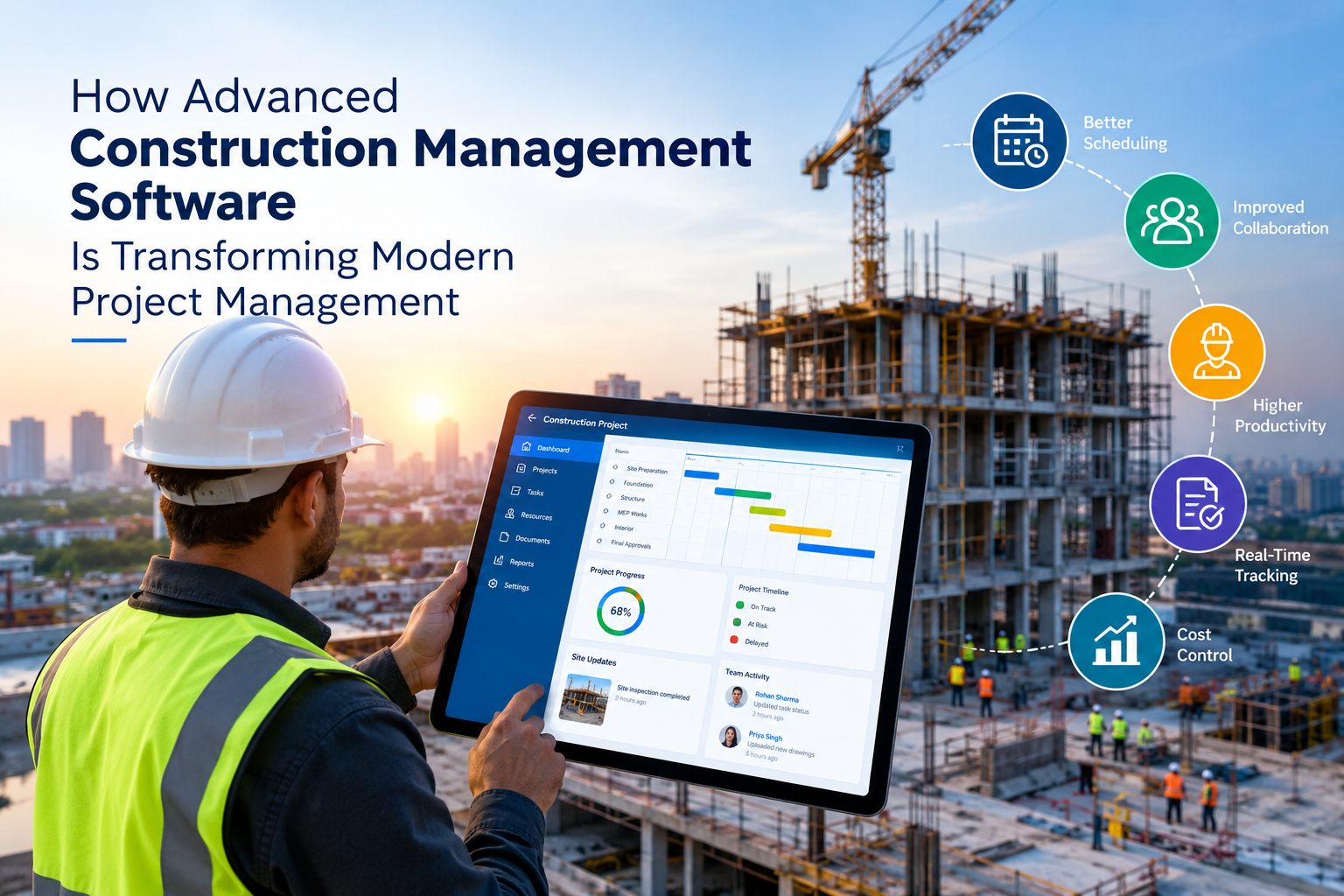
Budget overruns, construction delays, coordination failures, and quality risks aren’t new— but their impact on the economy and brand reputation has never been this grave before. Primarily, it could be due to the hidden driving engines— higher client expectations, tighter deadlines, regulatory pressure, and thinner margins. You would be surprised to know that McKinsey once reported that large-scale construction projects often experience a delay by 20% and a budget excess of 80%. What most businesses fail to realize is that gravitating towards obsolete, outdated methodologies can never put them at the forefront of the ongoing industry revolution. But embedding an advanced construction management software is another story— initiating the transformation, replacing chaos with clarity, and transforming complex projects into predictable, sustainable business growth. Table of Contents  Creating unified project visibility across sites and stakeholders Distributing information across paper files, emails, separate tools, and isolated teams introduces fragmentation. Site activity, approvals, progress updates, and design changes usually exist in different places, making it impossible for leaders to grasp a full picture. This is where the building project management software comes to play, flipping the dynamics completely. Here’s how. Replacing manual coordination with intelligent workflow automation Human-driven coordination leads to hidden inefficiencies— repetitive reporting, slow approvals, paperwork errors, and communication delays silently erode performance and inflate project costs. Most construction delays don’t usually come from the site work itself. Instead, the fueling factors are often overlooked— decision bottlenecks, missing approvals, poor information flow, and misplaced documents. Investing in construction business management software can make a real difference here by: Transforming planning into predictive project control Changes are constant in today’s construction environments. From resource availability to design revisions, unexpected supply delays, and stringent regulatory checks, these overlooked factors silently but continuously reshape project timelines. However, businesses that still leverage rigid plans fail to adapt seamlessly to these shifting dynamics. The result? Collapsed schedules and spiraling budget. The best and most feasible solution in 2026 is to invest in project management software for construction projects. Here’s why. Converting site activity into business planning Most construction firms deal with massive volumes of site data, documentation, and reports. However, only a little is utilized to influence strategy. Insights are missing even though information remains handy. Growth decisions usually rely more on experience and instincts than analysis and evidence. A construction project management system can, however, deliver planning intelligence rather than limiting site activities to mere numbers. Here’s how. Strengthening risk control and project governance Safety regulations, contractual obligations, and legal exposure continue to accelerate across construction sites. Manual control mechanisms multiple the risks instead of slashing them, creating vulnerabilities that affect both brand credibility and financial stability. Owing to this, businesses are now increasingly investing in a construction project management system. Here’s why. You Should Also Read These Blogs: Stop Losing Materials: Use Construction Inventory Management Software Maximizing profit margins with specialized ERP software for construction industry Conclusion Construction today isn’t just about building structures— it gravitates towards managing complexities, accountability, delivery quality, and business risks at scale. Disconnected tools quietly drain margins, weaken trust, and limit growth potential. This is where Construct Xpert comes to play, creating a measurable change with its advanced construction management software.

Why smart contractors are switching to advanced construction management software? Read Post »

Inventory management software for construction industry

Inventory management software for construction industry: Key features & benefits

Construction projects seldom fail because of one big mistake— they bleed through tons of small, unmanaged ones. Tools going missing, excess material lying unused, last-minute procurement, and silent wastage silently lead to margin erosion much before it comes to anyone’s radar. When inventory control depends on manual tracking and site-level judgment, unpredictability becomes routine, and cost overruns become unavoidable. This is where the inventory management software for construction industry has evolved into a strategic asset, not a support tool. It changes how materials are planned, financed, controlled, and protected. Having said that, let’s explore the salient features and real-time business benefits of the inventory tool— and how it transforms material handling from a risk factor into a competitive advantage. Table of Contents  Total material visibility across sites and storage zones When materials are spread across multiple projects, supplier points, storage yards, and transit routes, control declines rapidly. Teams start planning and making procurement decisions using partial information, outdated updates, and assumptions rather than factual information. This often leads to two costly extremes at once— overstocking that locks capital and shortages that stall progress.  Now, the inventory management software for construction industry establishes true control— visibility becomes centralized, continuous, and decision-ready instead of scattered and reactive. Here’s how! Predictive material planning that replaces reactive procurement Material shortages seldom appear suddenly— they develop silently when consumption patterns aren’t measured, and demand isn’t aligned with project timelines. The result? Procurement becomes reactive, emergency sourcing gets normalized, and cost control disappears. To top it off, planning turns into crisis management instead of strategic coordination.  This is where the inventory management software for construction company comes into play, replacing guesswork with foresight by embedding planning intelligence into daily workflows. Here’s how. Loss prevention through digital accountability and control Material loss in construction is rarely dramatic— it is gradual, silent, and difficult to trace. It happens through undocumented transfers, informal access, misplacement, misuse, damage, and poor storage control. Over time, this leakage becomes a major financial drain that rarely appears in reports but always appears in margins.  That’s why businesses nowadays are investing in construction inventory management software, as it: Financial control through real-time material cost intelligence Unmanaged inventory diminishes economic performance. When material data operates separately from financial planning, budgets lose accuracy, and margins lose clarity. To top it off, cash flow becomes unpredictable and hidden. Profit erosion seldom happens in large spikes— it occurs in small, untracked decisions. Now comes the material management software for construction— intertwining physical materials with financial intelligence like never before. Here’s how. Scalable control for growing construction businesses With firms expanding across projects, regions, and supplier networks, information coordination fail to work as per expectations. What once felt manageable becomes chaotic. Complexity multiplies faster than control mechanisms, while growth leads to risks instead of strength. Here’s how the inventory management system for construction company enables structured scalability.  Conclusion Inventory is no longer a mere logistic function— it’s a business control layer in the construction industry. Firms that manage materials with intelligence, visibility, and precision can protect margins, stabilize timelines, and gain financial clarity at scale. An inventory management software for construction industry doesn’t just organize stock; it shapes how decisions are made, capital is deployed, and growth is controlled. With Construct Xpert in the picture, investing in a feature-rich, advanced, and intelligent inventory tool is now effortless for businesses of all sizes.

Inventory management software for construction industry: Key features & benefits Read Post »

Scroll to Top